
Why a careful approach matters
Finding an old coin in a drawer can feel like stumbling on a tiny piece of history. The instinctive hope is that it’s worth a fortune, but coins are complicated: their worth hinges on more than age. A coin scanner story—who made it, how many like it exist, its condition, and how hungry collectors are for it—matters as much as the metal it’s made from. Approach the task like a detective: gather facts, eliminate errors, then compare what you have to reliable market data.
Rushing to sell or cleaning the coin with household items are common mistakes that destroy value. Conversely, getting a certification or a sound appraisal can increase sale price and marketability. This article will walk you through the tangible steps, tools, and resources that help you determine a realistic value and protect whatever worth you discover.
Essential tools you’ll want on hand
Before you begin, assemble a short kit. You don’t need a lab—just a handful of inexpensive, reliable tools that let you inspect, measure, and document the coin properly. These tools reveal telltale signs of authenticity, help identify the coin precisely, and make photos useful for research or sale.
- 10x jeweler’s loupe (or a USB microscope for photo work)
- Small digital scale (precision to 0.01 gram for smaller coins)
- Calipers (digital, for diameter and thickness)
- Non-magnetic test tools (a small magnet helps rule out certain fakes)
- Soft gloves or finger cots to avoid oils; non-PVC coin flips or cardboard holders
- Notebook or phone camera for clear, well-lit photos against a neutral background
These items are inexpensive and widely available through hobby shops or online. They help you check weight and dimensions against published standards, identify obvious alterations, and create documentation—steps that separate a casual guess from a defensible valuation.
Step-by-step: Identifying the coin
Read what’s on it
Start by reading the text on both sides carefully: denomination, date, mint mark, and any country or ruler names. Mint marks are often small letters indicating where the coin was struck; they can drastically change value. Note any unusual inscriptions or symbols and the language used—these details narrow down the coin’s origin and era.
Sometimes the date can be worn away or partially illegible. If only part of the date is visible, compare font characteristics, partial numerals, and design elements against reference images. Look for design features that are unique to a particular year or variety—those nuances often identify a specific issue.
Measure weight, diameter, and thickness
Record the coin’s weight and dimensions with your scale and calipers and compare them to known specifications for that type. Deviations of a few percent may indicate wear, while larger discrepancies suggest a counterfeit or an altered coin. For precious-metal coins, melt weight matters: a gold coin’s base metal content sets a lower bound on value.
Minting standards changed over time, so consult reference books or online databases for the correct specs. Keep your measurements written down; later, when you consult auction results or price guides, those numbers will help you match your coin to the correct listing.
Observe design details and errors
Look closely for small differences: doubling of letters (doubling), extra or missing design elements, repunched mint marks, and off-center strikes. Error coins and certain varieties can be markedly more valuable than their standard counterparts. Photograph these details clearly for later comparison.
Compare the coin’s relief, edge type (reeded, plain, lettered), and any die markers with examples from reliable references. A subtle die crack or a distinctive scratch might at first seem like damage, but if it matches a documented die variety it could be an identifying feature that raises the coin’s value for collectors.
Condition and grading: more than “good” or “bad”
Condition is often the single largest influence on a coin’s value. That said, grading is both subjective and standardized: professionals use specific criteria to assign a grade on the 70-point Sheldon scale (Poor-1 to Perfect-70) or descriptive levels like Fine (F), Very Fine (VF), Extremely Fine (EF/AU), and Mint State (MS).
Surface preservation, luster, strike quality, and any contact marks matter. A well-struck coin with original luster and only light surface marks can fetch far more than a heavily worn specimen of the same date and mintage. Avoid cleaning the coin to improve its appearance: even careful cleaning typically reduces its collector value significantly.
Common grading terms you need to know
| Term | What it means | Quick impact on value |
|---|---|---|
| Poor to Good (P–G) | Heavily worn; date and major details may be faint | Lowest market value; typically sold for metal content or as a reference piece |
| Fine to Very Fine (F–VF) | Moderate wear; major design elements visible though flattened | Collectible but modest premiums unless the date/mint is rare |
| Extremely Fine to About Uncirculated (EF–AU) | Light wear on high points; most details present; some luster | Higher demand; noticeable price jump versus VF |
| Mint State/Uncirculated (MS 60–70) | No circulation wear; strike and luster vary across grades | Top-tier pricing for desirable dates and low-mintage issues |
Professional third-party grading (PCGS, NGC, etc.) reduces subjectivity. Getting a coin certified and slabbed can cost money, but it often increases buyer confidence and sale price, particularly for rare or high-value pieces.
Understanding rarity and demand
Rarity isn’t just about the total number minted; it’s about how many examples survive in the condition that collectors want. A coin with a huge original mintage may still be scarce in high grades if most examples were circulated and heavily worn. Conversely, a small mintage coin might be plentiful on the market if many were hoarded.
Demand depends on collecting trends, historical events, and even pop culture. Some series—like Morgan dollars, pre-1933 gold pieces, or certain world coin types—consistently draw collector interest. A coin tied to a well-known historical period or featuring a popular portrait can command a premium regardless of technical rarity.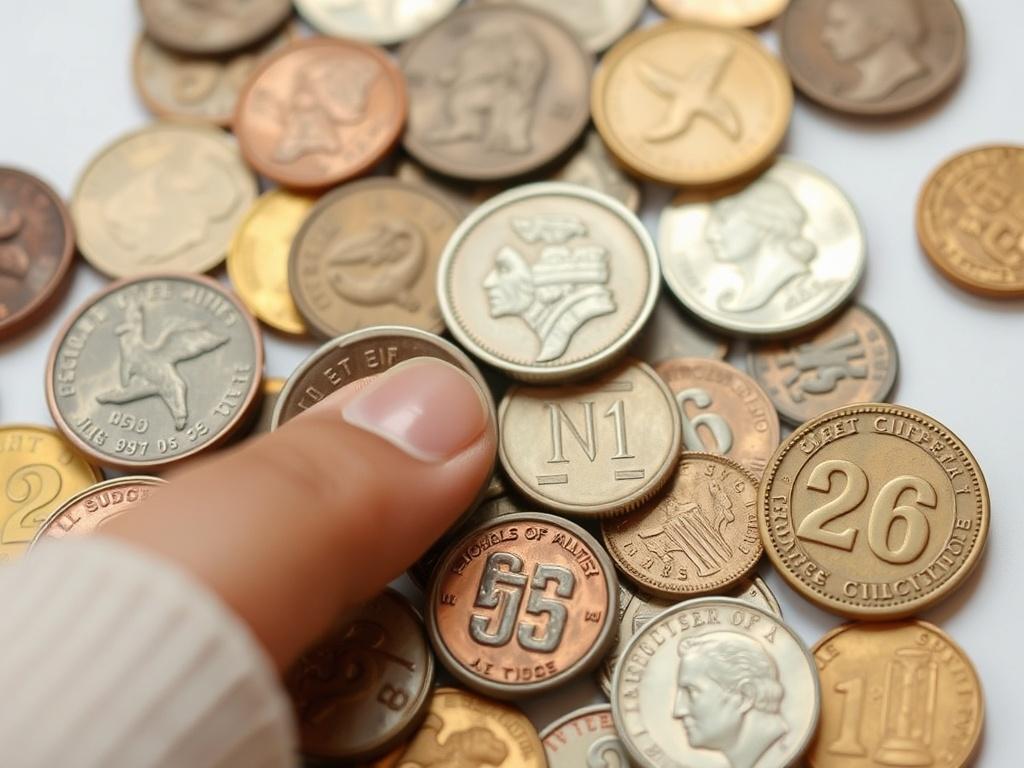
Where to research rarity and demand
- Official mintage figures: often available from national mints or numismatic reference books
- Numismatic catalogs like “A Guide Book of United States Coins” (the Red Book) for U.S. coins
- Online databases: PCGS CoinFacts, NGC Coin Explorer, and the Krause catalogs for world coins
- Auction archives: Heritage, Stack’s Bowers, and LiveAuctioneers show realized prices for similar coins
- eBay “Sold” listings and completed auctions give street-level pricing for common issues
Cross-reference these resources to form a realistic idea of where your coin fits in the market. Auction records show what buyers actually paid—not what a guidebook estimated—and they reveal grading ranges and premiums paid for eye appeal or provenance.
Price guides, auction results, and online resources
Price guides are a good starting point, but they offer generalized values. Guides typically provide a range for each grade rather than a single number, reflecting market variability. Treat guide prices as “ballpark” figures—they’re helpful for orientation but not definitive valuation.
Auction results are often the most reliable indicator of current market value. Look for coins that match your piece in type, date, mint mark, and grade. When matching, pay attention to eye appeal—factors like toning, color, and strike quality affect realized prices beyond grade alone.
Combine these online tools when researching: use a price guide for a baseline, auction archives for actual sales, and marketplace completed listings for a sense of what buyers pay in direct-to-buyer venues.
Certification: when to slab your coin
Third-party grading companies professionally grade coins and encapsulate them in tamper-evident holders—a process known as “slabbing.” For higher-value coins, or those with collectible varieties, slabbing can increase liquidity and trust. For small, common coins, the cost of grading may exceed the value-added for resale.
Consider slabbing when the coin is rare, expensive, or when buyers will pay a premium for certified authenticity. If you’re uncertain, a reputable specialist dealer can advise whether grading would be worthwhile. Always compare estimated sale price increases to the grading fee and potential shipping/insurance costs before deciding.
Detecting counterfeits and alterations
Counterfeits exist for almost every collectible coin, from ancient issues to modern bullion. Some fakes are crude and easy to spot; others are sophisticated. Use weight and dimension checks first—many counterfeits fail those tests. A magnet can catch base-metal imitations of silver or gold, and sharp visual inspection under magnification will reveal casting seams, pitting, or wrong surface texture.
Alterations include re-punching mint marks, date changes, and “cleaning” that strips original surfaces. Restorations and plating can be subtle. Compare suspect coins to authenticated examples and consult specialist forums or a professional authenticator when in doubt. Never sell a coin you suspect is counterfeit as genuine—legal consequences can follow.
How precious metal content affects value
For bullion coins and many old coins containing gold or silver, melt value sets a baseline. Calculate melt value by multiplying the coin’s precious-metal weight by the current metal spot price. However, numismatic premiums—collector demand, condition, and rarity—often exceed melt value, sometimes dramatically.
Do not assume that a silver or gold coin is worth only its melt value. Especially for rare dates or high-grade pieces, numismatic value can be several times the melt price. Use melt value to ensure you’re not underselling a piece, but then layer numismatic factors on top for a complete valuation.
Where and how to sell
Choosing where to sell depends on your priorities: speed, price, or convenience. Options include local coin dealers, coin shows, auctions (live or online), consignment through reputable auction houses, and online marketplaces like eBay. Each channel has costs—dealer margins, auction fees, listing fees—and different buyer pools.
Local dealers offer quick sales, but they must buy at a margin to cover overhead. Auctions reach serious collectors and can yield premium prices for desirable pieces, though fees and time-to-sale are higher. Online marketplaces reach wide audiences but require excellent photos, careful listing, and buyer protection steps.
Practical tips for selling
- Get multiple opinions for high-value coins: one appraisal isn’t enough
- Use high-quality photos showing both sides, close-ups of identifying features, and any damage
- Disclose all known issues: cleaning, repairs, or holes; honesty prevents disputes
- Factor in grading and auction fees before setting a reserve or accepting offers
- Consider consignment at a reputable auction house for rare coins, especially with established provenance
Marketing a coin correctly—clear photos, accurate descriptions, and comparison to realized auction prices—makes the difference between a frustrating sale and one that meets your expectations.
Pitfalls to avoid and best preservation practices
Do not clean coins with chemicals, brushes, or abrasives. Cleaning removes original surfaces and patina, and once removed, value rarely recovers. Handle coins by the edges with clean hands or gloves, and store them in inert holders or acid-free paper flips. Avoid PVC flips, which can leach harmful chemicals and leave a sticky residue.
Environmental control matters: store in a stable, moderate-humidity environment away from direct sunlight. For valuable coins, consider safety deposit boxes or a professional vault, and insure significant collections with a policy that covers market value rather than replacement cost based on melt value alone.
Common mistakes newcomers make
Among the frequent missteps: assuming every old coin is valuable, using household cleaning to “restore” appearance, relying on a single price guide without consulting auction results, and skipping authentication for high-value items. Another trap is selling quickly to the first buyer without getting competing offers, which can significantly reduce realized proceeds for a rare coin.
Take time to research, document, and seek a second opinion for expensive or unusual coins. A little patience and preparation typically result in a better price and fewer headaches.
Quick reference tables and checklists
| Attribute | What to check | How it affects value |
|---|---|---|
| Date & Mint Mark | Readable date; presence and location of mint mark | Critical for matching to specific varieties; can change value drastically |
| Weight & Dimensions | Compare against known specs | Fails indicate fakes or alterations; match supports authenticity |
| Condition/Grade | Wear, luster, marks, overall eye appeal | Principal driver of price for most coins |
| Rarity/Survival Rates | Mintage numbers, surviving specimens in each grade | Low survival in high grades increases value |
| Metal Content | Gold/silver content and purity | Sets melt floor; numismatic premiums often exceed this |
| Certification | Third-party grading and encapsulation | Increases buyer confidence and marketability for many collectors |
| Historical Significance | Provenance, connection to events or people | Can add substantial premiums if documented |
Seller’s quick checklist
- Document coin with photos and notes (date, mint mark, weight, diameter)
- Compare to price guides and at least two auction results
- Decide whether to get professional grading (weigh cost vs potential benefit)
- Choose selling venue with appropriate buyer base (dealer, auction, online marketplace)
- Disclose condition honestly and pack securely for shipment if selling online
When to consult a professional
If you suspect a coin is rare or potentially valuable—especially if its value could exceed a few hundred dollars—get a second opinion from a reputable dealer or independent appraiser. Professionals can recognize varieties, provenance, and subtle authenticity issues that are easy to miss. They can also advise whether grading, conservation, or targeted auction marketing is likely to improve your net proceeds.
Look for professionals with established credentials and verifiable track records. Membership in recognized numismatic organizations, auction house affiliations, and positive reviews from other collectors are good signs. If you’re dealing with estate settlement or insurance valuation, insist on written appraisals from accredited appraisers.
Final thoughts and next steps
Checking the value of old coins blends methodical research with practical inspection. Start with accurate identification and measurements, resist the impulse to clean, consult multiple sources, and consider professional grading when appropriate. Documentation and patience are your best tools. The process rewards attention: a carefully researched coin earns a fair price, and you preserve a piece of history for the collector who values it most.
If you’ve found a coin that looks promising, begin with the checklist above, take clear photographs, and compare your piece to auction archives and reputable catalogs. If doubt remains, reach out to a trusted dealer or a grading service for an appraisal. A few careful steps now can preserve and reveal the true value of that old coin.